Best Chiropractor in Calgary for Tennis Injuries
Tennis is one of those sports that rewards you for showing up, and punishes you for showing up too often without the right preparation. The repetitive nature of the serve, forehand, and backhand puts cumulative stress on your shoulder, elbow, wrist, and lower back. And because the demands are so repetitive, the injuries tend to be repetitive too.
If you’ve been nursing a sore elbow that flares up every time you grip the racquet, or a shoulder that aches the morning after a match, you’re not alone. The good news: most tennis injuries respond extremely well to conservative care, which means you can often skip the cortisone shots and the time off entirely, provided you address the issue early and address it properly.
At Riverside Sports Therapy, we work with recreational players, club athletes, and competitive juniors across Calgary and Cochrane. Here’s what you should know about finding the best chiropractor in Calgary for tennis injuries, what treatment actually looks like, and how to get back on the court without losing your season.
Why Tennis Injuries Are Different
Most sports injuries fall into one of two categories:
- Acute – something happened in a single moment, like a sprained ankle
- Repetitive strain – something built up over weeks or months of training
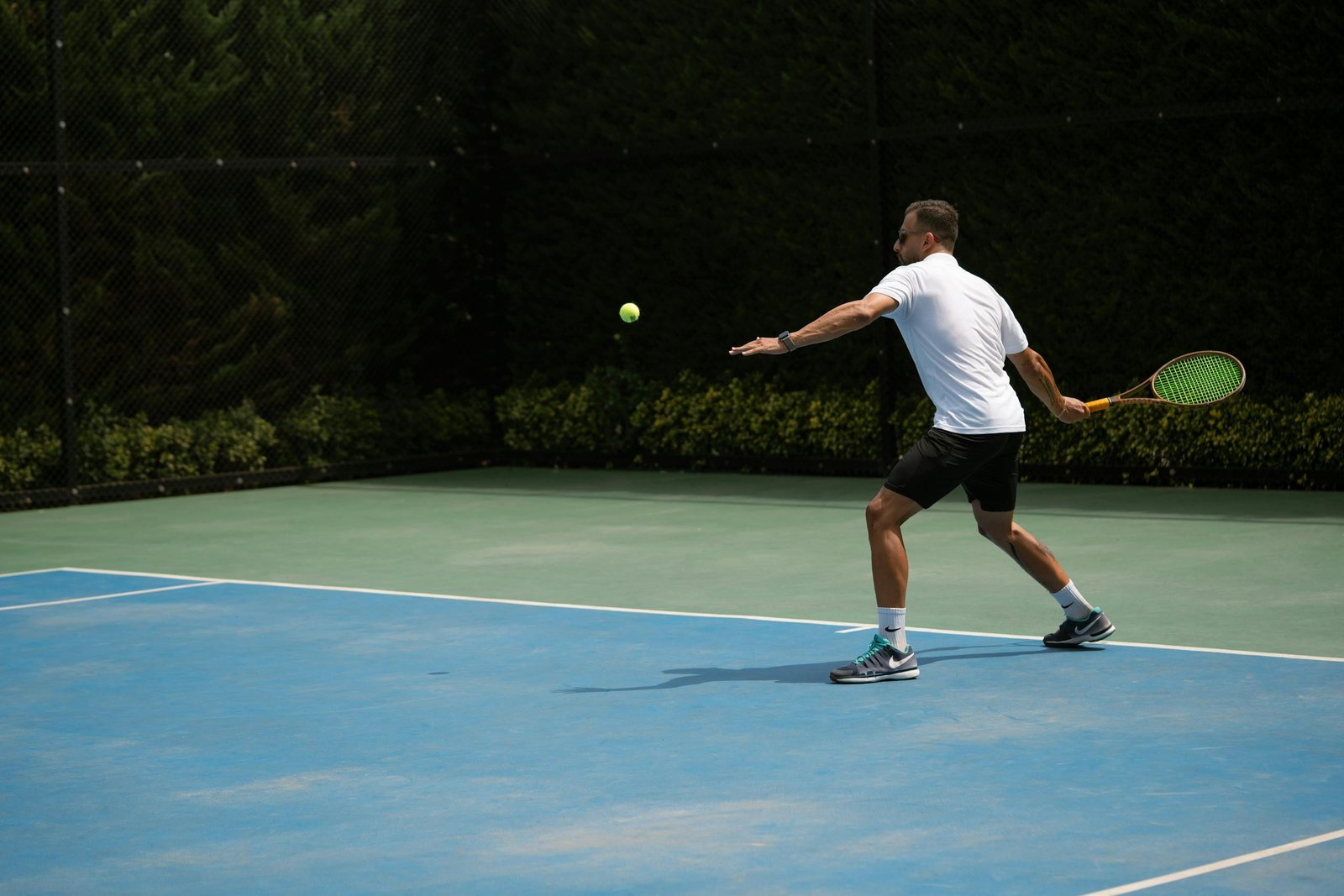
Tennis injuries are overwhelmingly the second kind. The serve alone is one of the most biomechanically demanding movements in sport because it involves rapid shoulder rotation, elbow extension, wrist snap, and spinal rotation, all coordinated in under half a second. Multiply that by a few hundred serves per week, and you start to see why tennis players develop very predictable patterns of injury.
The most common ones we see at Riverside include:
- Lateral epicondylitis (aka tennis elbow) – Pain on the outside of the elbow from repetitive wrist extension. Despite the name, it’s not actually most common in tennis players, but tennis players do get it, especially with one-handed backhands or oversized grips.
- Rotator cuff strain and impingement – From the repeated overhead motion of the serve. The shoulder gets stuck in a pattern of tightness and weakness that doesn’t resolve on its own.
- Wrist strain – Particularly in players who rely heavily on wrist snap or use a racquet that’s too heavy.
- Lower back pain – The rotational demand of tennis is significant, and the lumbar spine often takes the brunt of it.
- Hip and groin strain – From the lateral movement, lunging, and sudden directional changes.
The pattern is the same across all of these: the tissue gets loaded faster than it can adapt, and instead of getting stronger, it gets irritated. Rest helps temporarily, but the moment you return to the court, the same biomechanical issue produces the same injury.
What a Sports Chiropractor Actually Does for Tennis Injuries
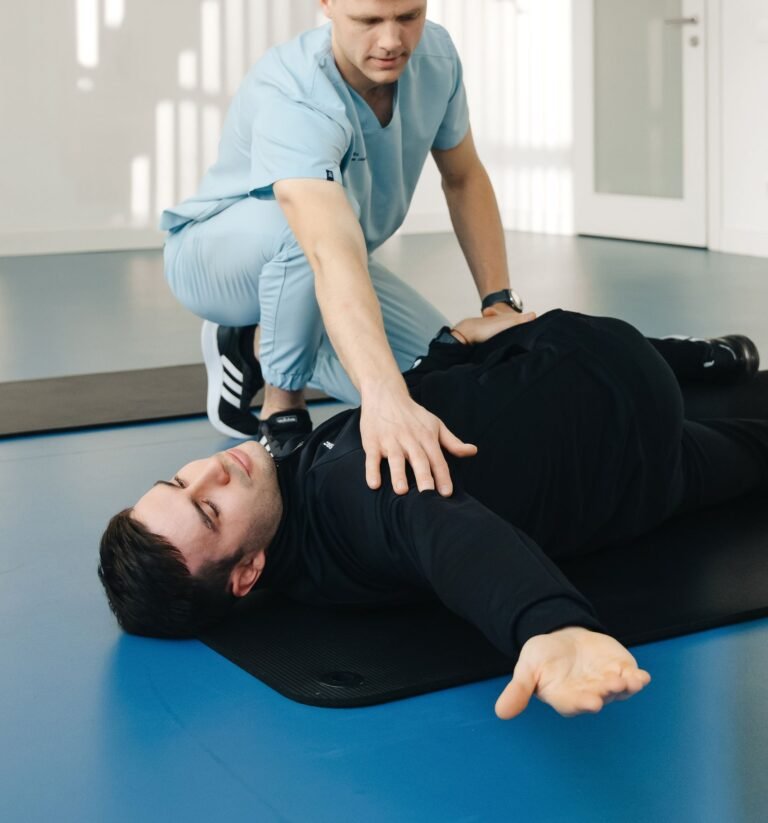
There’s a common misconception that chiropractors only treat the spine. They don’t. A sports chiropractor is trained to assess and treat the entire musculoskeletal system – every joint, every soft tissue structure, every link in the kinetic chain that produces the movements your sport requires.
For a tennis player, that distinction matters. Pain in your elbow might originate at your shoulder. Pain in your shoulder might originate in your thoracic spine. Pain in your lower back might be the result of poor hip mobility. The best chiropractor in Calgary for tennis injuries won’t just treat the spot that hurts – they’ll find the link in the chain that’s actually broken.
Treatment typically involves a combination of:
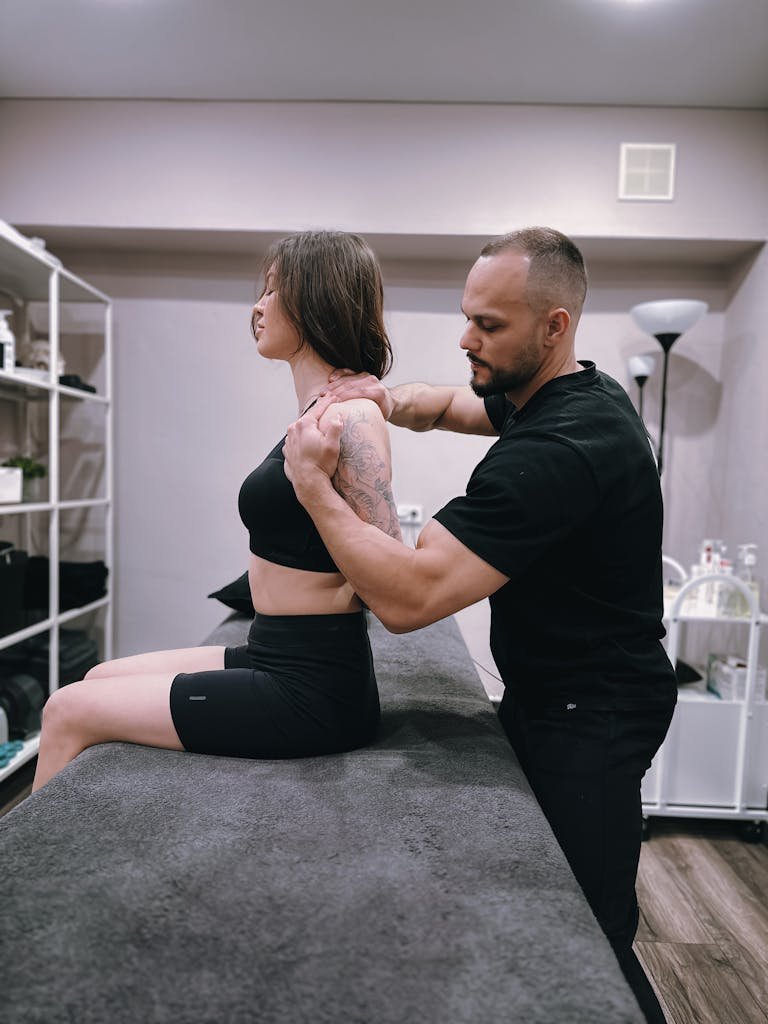
- Joint manipulation and mobilization – To restore proper movement in restricted joints, especially in the thoracic spine, shoulder, and elbow.
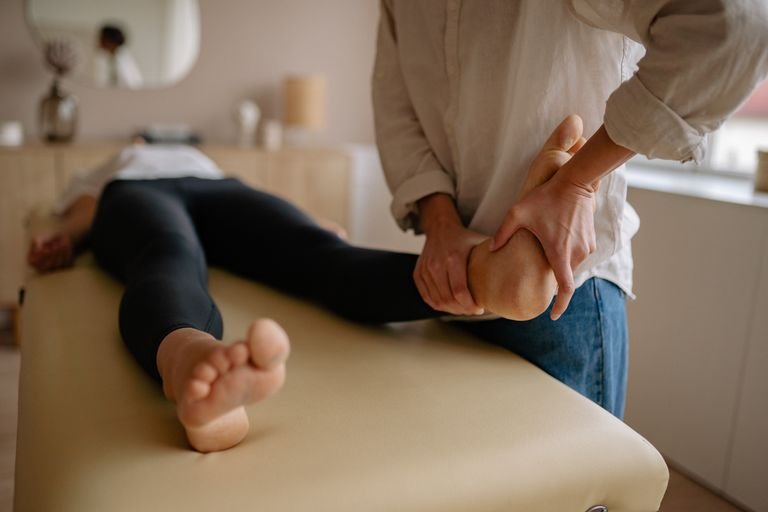
- Soft tissue therapy – Including manual release, instrument-assisted soft tissue mobilization (IASTM), and trigger point work to address muscle tightness and adhesions.
- Rehabilitation exercise – Loading the injured tissue progressively so it gets stronger rather than just less painful. This is where most self-treated injuries fail.
- Movement assessment – Looking at how you actually serve, swing, and move, and identifying the biomechanical issue that produced the injury in the first place.
The goal isn’t just to make the pain go away. It’s to make the pain not come back.
What to Look for in a Calgary Chiropractor for Sports Injuries
Not every chiropractor treats sports injuries, and not every chiropractor who claims to treat sports injuries has the training or clinical setup to do it well. If you’re a tennis player looking for care, here’s what to look for:
- Experience with athletes – A clinic that regularly treats runners, lifters, racquet sport players, and overhead athletes will have seen your injury hundreds of times. Pattern recognition matters.
- A team approach – Sports injuries often benefit from a combination of chiropractic, physiotherapy, massage therapy, and rehab. A clinic where all of those services are under one roof can coordinate your care without making you bounce between providers.
- Exercise-based rehabilitation – The research on tendinopathies, rotator cuff injuries, and most repetitive strain conditions is unambiguous: loaded exercise is non-negotiable for long-term resolution.
- A return-to-sport plan – The endpoint isn’t “pain-free at rest.” It’s “performing your sport at full capacity without the injury returning.” Your clinician should be planning toward that from session one.
How Long Does Recovery Take?
Honest answer: it depends. A mild case of tennis elbow caught early might resolve in 3-4 weeks of consistent treatment and home rehab. A more entrenched case might take 8-12 weeks of dedicated work.
Rotator cuff issues sit on a similar spectrum. Mild impingement responds quickly. A partial tear, depending on size and location, may take three months or longer to manage conservatively before any conversation about imaging or surgical consultation is warranted.
The single biggest predictor of recovery time isn’t the injury itself – it’s how long you waited before getting it assessed. The repetitive strain conditions that take three months to resolve are almost always the ones that should have been treated three months ago.
Treatment at Riverside Sports Therapy
Riverside Sports Therapy has clinics in Calgary and Cochrane, and our team includes chiropractors, physiotherapists, massage therapists, and athletic therapists who work together on your case. We treat athletes across every level, from weekend club players to varsity competitors, and our focus is always the same: get you back to your sport, performing better than you were before the injury.
If you’ve been dealing with a tennis injury that won’t quite resolve, or you’ve felt something tweak and want to address it before it becomes a season-ender, book an assessment with our team. We’ll figure out what’s actually going on, build a treatment plan, and get you back on the court.