
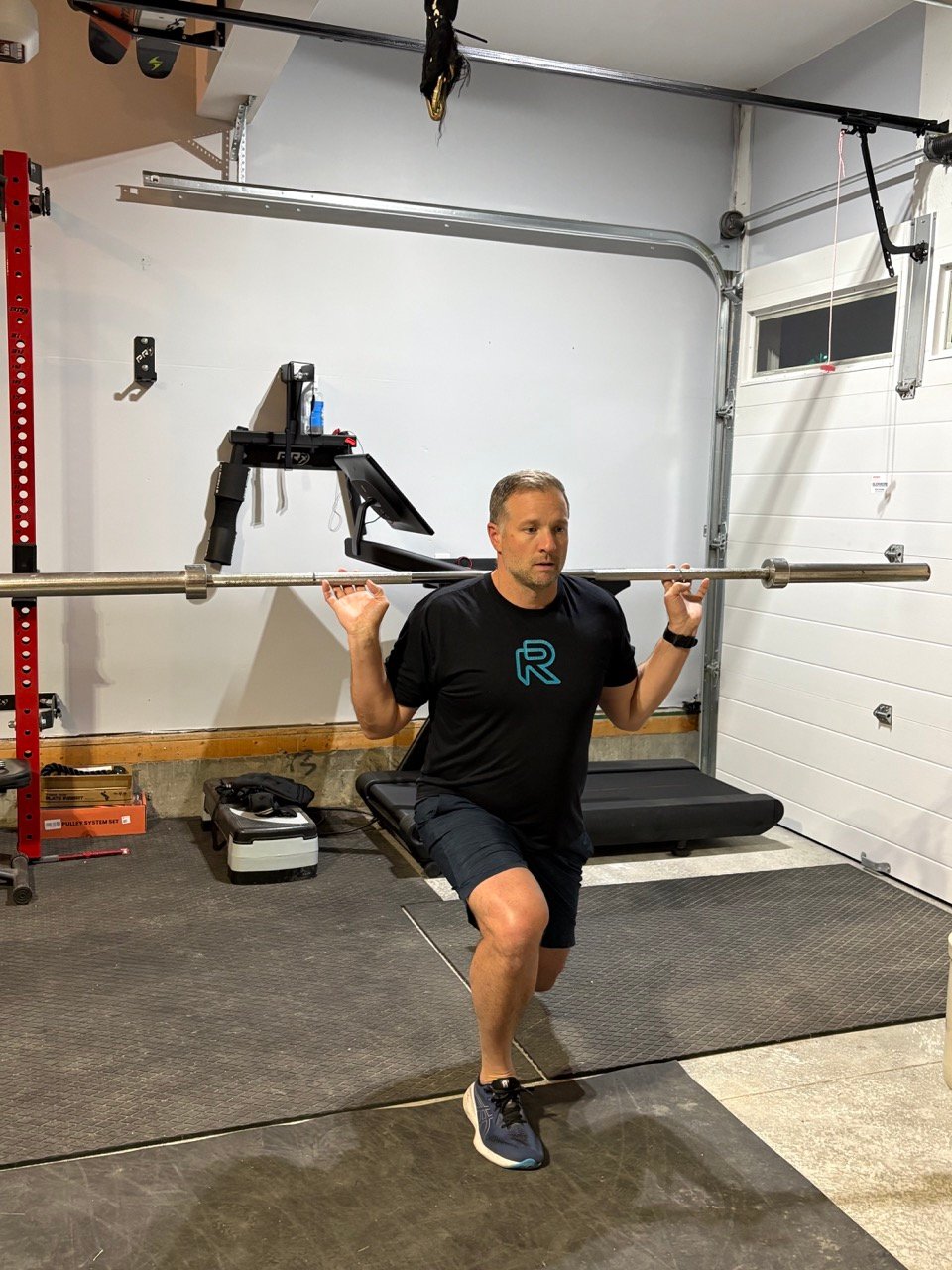
How Dr. Bryan Myles Approaches HYROX Training in Calgary
On November 14, 2026, Dr. Bryan Myles will line up for his first HYROX race in Denver, Colorado. Between now and then, while he’s participating in HYROX training in Calgary, he’s running two businesses, showing up for his wife Sarah and their two kids, and fitting in the training, meal prep and recovery a race like this demands.
Sound familiar? Most people training for HYROX aren’t full-time athletes. They’re parents, business owners and shift workers squeezing workouts into lunch breaks and early mornings. Bryan’s road to Denver looks a lot like theirs, and that’s exactly the point.
What HYROX Asks of Your Body
HYROX is a fitness race built around running. You run 8 km in total, split into eight 1 km runs, and each run is followed by a functional workout station: the SkiErg, sled push, sled pull, burpee broad jumps, rowing, farmer’s carry, sandbag lunges and wall balls.
It’s a test of endurance, strength and grit, all at once. It also loads nearly every part of the body, often while you’re already tired. That’s what makes it so rewarding, and it’s why preparation matters. Your legs, hips, lower back, shoulders and grip all have to hold up for the whole race, not just the first few stations.
The Work Continues Outside the Gym
The workouts get the attention. The race is often won or lost in the hours around them:
- Fuel – Training hard without eating well is like driving on an empty tank. For Bryan, hitting his macros consistently is non-negotiable, but hours of weekly meal prep aren’t realistic with two businesses and a busy family. That’s where his collaboration with Fit Kitchen comes in. Their ready-made meals keep his nutrition on track and take food prep off his plate, freeing up time for training, recovery and family.
- Rest – Fitness gains happen during recovery, not during the workout. Sleep, rest days and easy sessions are part of the training plan, not breaks from it.
- Life – Training that only works if everything else in your life stops isn’t sustainable. The best plan is the one you can stick to while still being present for the people who matter.
We Practise What We Preach
Bryan isn’t the exception at Riverside Sports Therapy. He’s a good example of how our whole team works.
Our practitioners and doctors don’t just recommend exercise, good nutrition and injury prevention. We live it. We train regularly, keep our bodies moving, fuel ourselves well, and do the same prehab and mobility work we give our patients. When we tell you to warm up properly, take your rest days seriously, or fix a nagging imbalance before it turns into an injury, it’s advice we follow ourselves.
That matters for you, because it changes how we treat you:
- We understand the goal – We know what it’s like to have a race on the calendar and a training block you don’t want to lose. Our job is to keep you moving toward it, not to tell you to stop.
- We know how training actually feels – The difference between normal soreness and something that needs attention is easier to spot when you’ve felt both.
- Our advice is realistic – We know how hard it is to fit training around work and family, so our plans are built for real schedules, not ideal ones.
- We test what we teach – Our exercises, warm-ups and recovery strategies have been tried in our own training too.
Common HYROX Injuries and How to Prevent Them
Most HYROX injuries aren’t dramatic. They’re overuse problems that build quietly when training volume climbs faster than the body can adapt. The usual suspects:
- Knee pain from running mileage plus lunges and wall balls
- Lower back strain from sled pushes, sled pulls and carrying while fatigued
- Achilles and calf issues from increased running volume
- Shoulder irritation from wall balls, the SkiErg and rowing
- Hip flexor and groin tightness from lunges and burpee broad jumps
A few habits go a long way:
- Build volume gradually. Add running distance and station work week by week, not all at once.
- Practise the stations with good form, especially when tired, because that’s when form breaks down on race day.
- Warm up like you mean it. Ten minutes of mobility and activation beats ten weeks of rehab.
- Strength train. Strong glutes, hips and core protect your knees and back.
- Deal with niggles early. A minor ache that keeps coming back is your body asking for attention. An assessment now can save your race later.
Training for HYROX Yourself?
Whether it’s your first race or you’re chasing a new personal best, our team can help you get to the start line strong and healthy. We work with athletes on injury prevention, recovery and treatment. We’ll help you keep training through the build, not around an injury.
Book a visit at our Calgary or Cochrane clinic. And from all of us: good luck in Denver, Bryan! Thanks to Fit Kitchen for supporting him on the road to the start line.