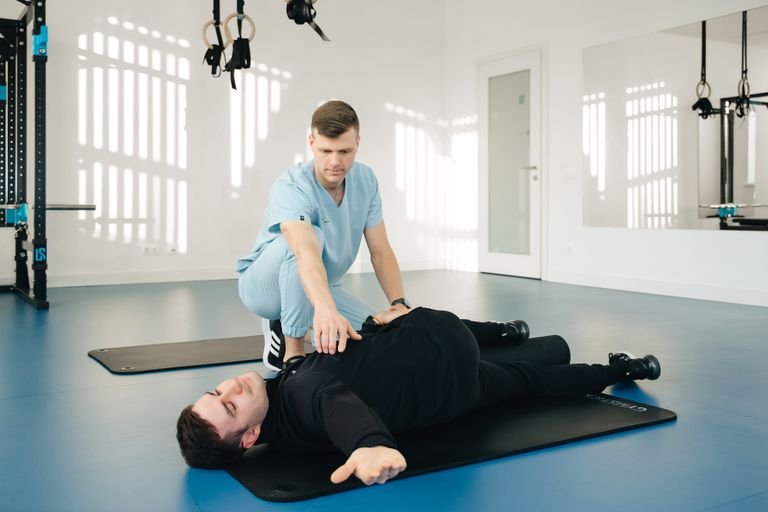

Pinched Nerve in Your Neck? What Our Chiropractor in NW Calgary Can Do
It usually starts as a stiff neck. Then the pain starts travelling: into your shoulder blade, down your arm, maybe all the way to your fingers. Some mornings your hand tingles like it fell asleep and never fully woke up.
That pattern is a classic sign of a pinched nerve in the neck. The good news is that most cases improve with the right conservative care. Here’s what’s actually going on, what you can do about it, and how our chiropractor in NW Calgary approaches it.
What is a Pinched Nerve in the Neck?
Your cervical spine (the neck) is made up of seven vertebrae stacked on top of each other. Between each pair, nerve roots exit the spinal cord and travel out to your shoulders, arms, and hands.
A “pinched nerve” happens when one of those nerve roots gets compressed or irritated. The medical term is cervical radiculopathy. Because that nerve supplies a specific path down the arm, the symptoms often show up far from where the problem actually is.
Common symptoms
A pinched nerve in the neck doesn’t always feel like neck pain. Watch for:
- Sharp, burning, or aching pain that radiates from the neck into the shoulder, shoulder blade, or arm
- Tingling or “pins and needles” in the arm, hand, or fingers
- Numbness in part of the arm or hand
- Weakness in the arm or hand, like trouble gripping or lifting
- Pain that gets worse when you turn your head, look up, or hold one position for a long time
Symptoms are usually on one side, and they can come and go depending on your posture and activity.
What Causes a Pinched Nerve in the Neck?
There are a few common culprits for a pinched nerve in the neck:
- Disc herniation – The discs between your vertebrae act as cushions. When one bulges or herniates, it can press on a nearby nerve root. This is more common in people under 50.
- Age-related changes – Over time, discs lose height and the joints can develop bone spurs, narrowing the space where nerves exit the spine.
- Posture and repetitive strain – Long hours looking down at a laptop or phone, sleeping in an awkward position, or repetitive overhead work can all contribute to irritation.
- Sports and sudden injuries – Contact sports, falls on the slopes, or a whiplash-type injury can strain the neck and irritate a nerve.
When It’s More Than a Simple Pinched Nerve
Most pinched nerves aren’t emergencies, but some symptoms need urgent medical attention. Go to the emergency department or see a physician promptly if you have:
- Weakness that is getting worse quickly
- Trouble with balance, walking, or coordination in your hands
- Changes in bladder or bowel control
- Neck pain after a significant trauma, such as a car accident or a bad fall
- Neck pain with fever, unexplained weight loss, or a history of cancer
These can signal something more serious than an irritated nerve root.
How Our Chiropractor in NW Calgary Can Help a Pinched Nerve
Research shows that most people with cervical radiculopathy improve with conservative, non-surgical care. That’s where a chiropractor fits in. At Riverside Sports Therapy, treatment for a pinched nerve starts with understanding exactly what’s happening, not with a one-size-fits-all adjustment.
A thorough assessment first
Your first visit begins with a conversation about your symptoms, how long they’ve been going on, and what you need to get back to. We’ll assess your neck movement, strength, reflexes, and sensation to identify which nerve is involved and rule out anything that needs a referral. If imaging or a physician’s input is needed, we’ll tell you.
A treatment plan built around you
Depending on your assessment, your care may include:
- Chiropractic care – Gentle spinal mobilization or adjustments to improve joint movement and reduce pressure on irritated tissues. Your chiropractor will choose techniques based on your comfort and what’s appropriate for your condition.
- Active Release Therapy (ART) – A hands-on soft tissue technique that targets tight muscles and tissues in the neck, shoulders, and upper back that can add to nerve irritation.
- Graston Technique – Instrument-assisted soft tissue work to address restrictions and improve mobility.
- Acupuncture – Used alongside other treatments to help manage pain and muscle tension.
- Exercise athletic therapy – Targeted mobility and strengthening exercises to support your neck, improve posture, and reduce the chance of the problem coming back.
Education you can use between visits
We’ll also show you what to do at home: how to adjust your workstation, sleep positions that take pressure off your neck, and which movements to ease off of while things settle down.
Is it Worth Seeing a Chiropractor in NW Calgary For a Pinched Nerve in My Neck?
For most people, yes, especially if your symptoms have lasted more than a few days, keep coming back, or include tingling or numbness in your arm or hand.
A pinched nerve isn’t just a sore neck that needs time. Something is irritating the nerve root, whether that’s a disc, tight surrounding tissue, joint stiffness, or the way you sit for eight hours a day. Waiting it out sometimes works, but when it doesn’t, people often spend weeks adjusting how they sleep, work, and train around the pain without knowing what’s causing it.
Seeing a chiropractor gets you three things you can’t get from waiting:
- An answer and peace of mind – A proper assessment checks your movement, strength, reflexes, and sensation to work out which nerve is involved and what’s likely irritating it. It also screens for signs that something needs a physician’s attention instead.
- A plan that fits the cause – Gentle mobilization, soft tissue work like Active Release Technique or Graston, acupuncture, and targeted exercise can all play a role. Which ones you get depends on what’s actually going on, not a standard routine.
- A way to keep it from coming back – Workstation changes, sleep positions, and strengthening exercises address the habits that set the problem up in the first place.
It’s also convenient. You don’t need a doctor’s referral to see a chiropractor in Alberta, and many extended health plans cover chiropractic care. If you live or work in Parkdale, Montgomery, Bowness, St. Andrews Heights, or the University District, our Point McKay clinic is close by.
When is it not the right first step? If you have rapidly worsening weakness, trouble with balance or coordination, changes in bladder or bowel control, or neck pain after a serious accident, see a physician or go to the emergency department first.
What You Can Do Right Now For a Pinched Nerve in Your Neck
While you wait for your appointment, a few simple steps can help:
- Avoid positions that make symptoms worse, especially long stretches looking down at a screen
- Take regular movement breaks if you work at a desk
- Use a supportive pillow that keeps your neck in a neutral position
- Stay gently active; complete rest usually isn’t the answer
If your symptoms aren’t improving after a few days, or they’re getting worse, don’t wait it out. Early care often means faster recovery.
Looking For a Top Chiropractor in NW Calgary?
Riverside Sports Therapy is located at Point McKay in northwest Calgary at #200 – 110 Point McKay Crescent NW, between the two Riverside towers and close to the Bow River pathway. We’re an easy trip from Parkdale, Montgomery, Bowness, St. Andrews Heights, and the University District.
Our team combines chiropractic care, athletic therapy, acupuncture, Active Release Technique, and Graston Technique, so your treatment plan can draw on more than one approach under one roof. Whether you’re an athlete, a weekend warrior, or someone whose neck has had enough of their desk chair, we’ll help you get back to moving without pain.
Book an appointment with our chiropractor in NW Calgary today.
Disclaimer: This article is for general information and isn’t a substitute for an individual assessment. If you’re experiencing symptoms, book an appointment or speak with a healthcare provider.
Frequently Asked Questions
How long does a pinched nerve in the neck take to heal?
It varies. Many people notice improvement within a few weeks of starting care, while others take longer depending on the cause and how long symptoms have been present. Your chiropractor can give you a more specific idea after your assessment.
Is it safe to see a chiropractor for a pinched nerve?
For most people, yes. A proper assessment comes first so your chiropractor can screen for anything that needs medical attention and choose techniques that suit your condition. Adjustments aren’t the only option; gentle mobilization and soft tissue therapy are often part of the plan.
Do I need a referral to see a chiropractor in Alberta?
No. You can book directly with a chiropractor in Alberta without a doctor’s referral. Many extended health plans cover chiropractic care, so check your benefits.
Can a pinched nerve go away on its own?
Sometimes, yes. But symptoms that linger, keep coming back, or include numbness or weakness are worth getting assessed so the underlying cause can be addressed.