
What Is Fascial Stretch Therapy (And Is It Right for You)?
If you’ve ever stretched your hamstrings every day for a month and still couldn’t touch your toes, you already understand the problem fascial stretch therapy was built to solve. Sometimes the issue isn’t the muscle. It’s what surrounds it.
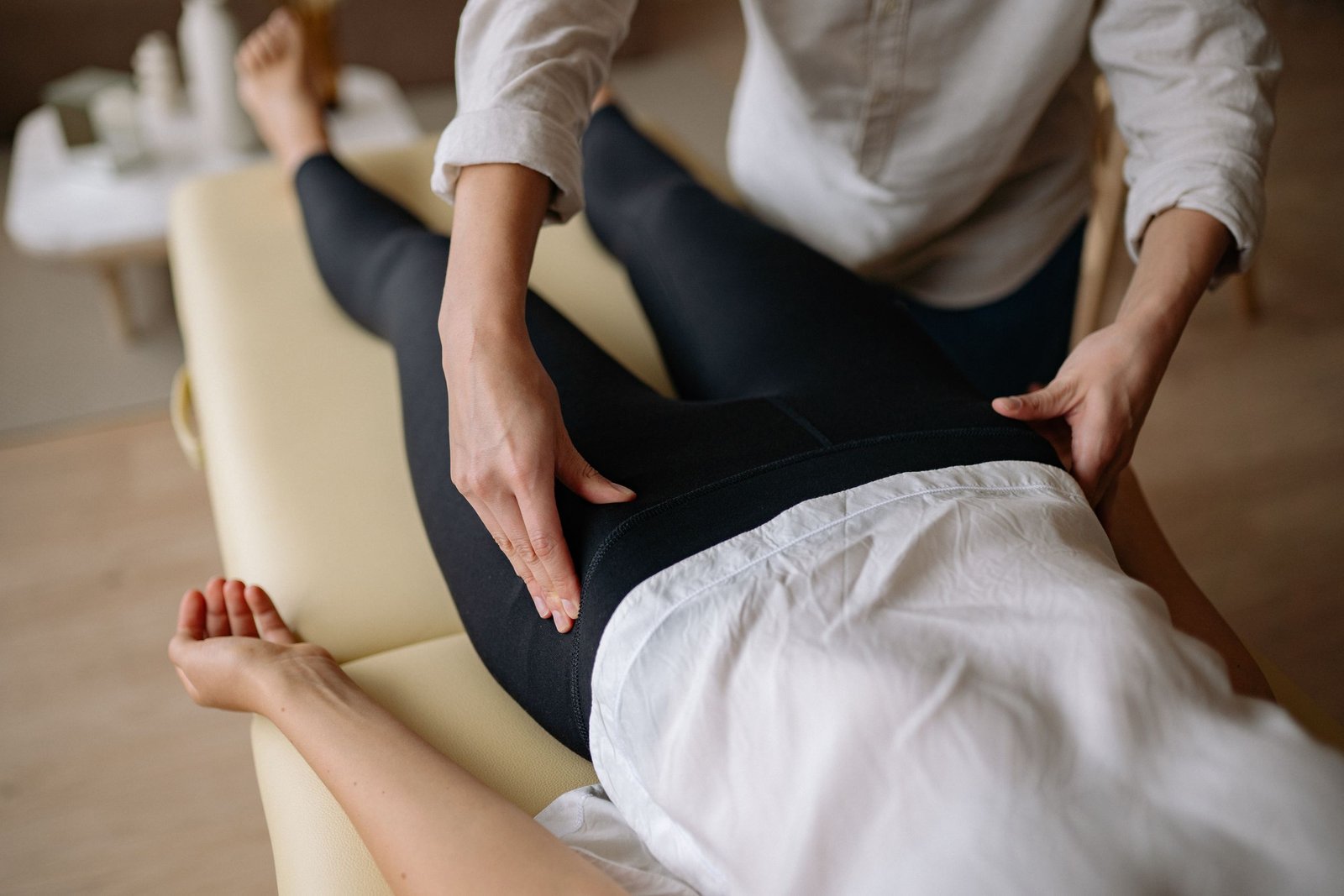
So, what is fascial stretch therapy? Fascial stretch therapy (FST) is an assisted, table-based stretching technique where a trained therapist moves your body through gentle, pain-free stretches that target your fascia and joints, not just your muscles.
You lie on a padded table, fully clothed, while your therapist does the work. The goal is better mobility, less stiffness, and a body that moves the way it’s supposed to. Below, we’ll break down how it works, who it’s good for, and what you can expect from a session.
First, What Is Fascia?
Fascia is a web of connective tissue that wraps around and runs through every muscle, bone, nerve, and organ in your body. Picture the thin, white film you see on a chicken breast. That’s fascia, and you have it everywhere.
Healthy fascia is supple and glides easily. But injury, repetitive movement, long hours at a desk, intense training, or even stress can leave it tight and restricted. When that happens, you might notice:
- Stiffness that doesn’t improve with regular stretching
- A limited range of motion in your hips, shoulders, or back
- Movement that feels “stuck” or uneven from one side to the other
- Nagging aches that seem to travel or don’t have a clear cause
Because fascia connects everything, a restriction in one area can show up somewhere else entirely. Tight hips can contribute to low back pain. A stiff upper back can affect how your shoulder moves. That’s why fascial stretch therapy looks at the whole chain, not just the spot that hurts.
How Fascial Stretch Therapy Works
Fascial stretch therapy was developed by Ann and Chris Frederick of the Stretch to Win Institute. It’s different from the stretching you’d do on your own, and different from a coach pushing on your leg after practice.
It’s Assisted and Table-Based
You lie on a padded table and relax while your therapist positions and moves your body. Stabilizing straps hold one limb in place so the therapist can isolate the area they’re working on. Since you’re not holding yourself up or bracing, your muscles can actually let go.
It Uses Gentle Traction
Before stretching, your therapist gently draws the joint apart, a technique called traction. This creates space in the joint capsule, which is often where stiffness lives. Many people describe this as the moment it “clicked” for them.
It Moves in Multiple Directions
Your body doesn’t move in straight lines, so FST doesn’t stretch in straight lines either. Stretches move through multiple planes, with smooth, wave-like movements rather than static holds. This reaches more of the fascial network than a basic front-to-back stretch.
It’s Synchronized With Your Breathing
Your therapist will cue your breath and time movements to it. Breathing out helps your nervous system relax, which allows a deeper and more comfortable stretch.
It Should Never Hurt
This is a big one. Fascial stretch therapy is meant to be pain-free. If your body senses pain, it tightens up to protect itself, which works against the whole point. Your therapist will check in often and adjust the intensity based on your feedback.
Fascial Stretch Therapy vs. Regular Stretching
Stretching on your own has its place, but it has limits. When you stretch alone, some of your muscles are working to hold the position, so they can’t fully relax. Most people also stick to the same few familiar stretches, which tends to target muscles rather than joints and fascia.
With fascial stretch therapy:
- Your therapist does the work, so your body can fully relax
- Joint traction reaches stiffness that solo stretching often misses
- Movements cover multiple planes and connected areas, not one muscle at a time
- A trained professional assesses how you move and spots imbalances you might not notice
Fascial Stretch Therapy vs. Massage
Massage and fascial stretch therapy complement each other, but they aren’t the same thing. Massage works on soft tissue through direct pressure and hands-on techniques. Fascial stretch therapy works through movement, traction, and stretching. You stay fully clothed, and there’s no oil or lotion.
Many people find the two work well together. Massage can address specific tight spots, while FST improves how your joints and connected tissues move as a whole.
Who Can Benefit From Fascial Stretch Therapy?
You don’t need to be an athlete to benefit from fascial stretch therapy. It’s commonly used by:
- Athletes and active people looking to improve mobility, support recovery, and move more efficiently
- Desk workers dealing with tight hips, rounded shoulders, and a stiff neck from hours of sitting
- People recovering from injury who need to regain range of motion (often alongside physiotherapy or other care)
- Anyone with chronic stiffness who feels tight no matter how much they stretch
- Older adults who want to stay mobile and keep doing the things they enjoy
If you’re managing a specific injury or medical condition, it’s a good idea to talk with your healthcare provider and let your therapist know before your first session.
What Are the Benefits of Fascial Stretch Therapy?
People often report a noticeable difference after a session, including:
- Improved flexibility and range of motion
- Reduced stiffness and muscle tension
- Better posture and more balanced movement
- Faster-feeling recovery after training or competition
- A general sense of relaxation and lightness
While fascial stretch therapy offers many benefits, it’s important to be honest here: research on fascial stretch therapy is still limited, and results vary from person to person. What’s well established is that assisted stretching and improved mobility can help people move more comfortably. The best way to know whether FST works for you is to try it and pay attention to how your body responds.
What to Expect at Your First Session
If you’ve never had fascial stretch therapy before, here’s what a typical first visit looks like:
Assessment
Your therapist will ask about your goals, activity level, injuries, and any areas of pain or stiffness. They’ll usually watch how you move to identify restrictions and imbalances.
The Stretch Session
You’ll lie on the table, fully clothed, while your therapist guides you through a series of stretches. Wear comfortable, stretchy clothing like athletic wear. Expect a lot of breathing cues and check-ins about how each stretch feels.
Afterward
Most people feel looser and lighter right away. Some feel a little tired or mildly sore the next day, similar to after a good workout. Drink water, move gently, and let your therapist know how you felt at your next appointment.
Try Fascial Stretch Therapy at Riverside Sports Therapy
If you’re tired of stretching that never seems to stick, fascial stretch therapy might be the missing piece. Our therapists at Riverside Sports Therapy will assess how you move, listen to your goals, and build a session around what your body actually needs.
Ready to move better? Book your fascial stretch therapy appointment with Riverside Sports Therapy today.