How to Improve Balance at Home: A Simple Guide to Steadier Movement
Most of us never think about balance until it starts to fail us – a stumble on the stairs, a wobble stepping off a curb, or that unsteady feeling after a long day. The good news is that balance isn’t fixed. It’s a skill your body builds, and with the right approach, you can absolutely learn how to improve balance at any age.
Understanding what’s happening underneath every steady step makes the training far more effective. Balance isn’t one thing. It’s five systems working together, and knowing them helps you train the right one.
The 5 Systems Your Balance Depends On
- Your inner ear (vestibular system) – Deep inside your ear, tiny structures track the position and movement of your head. This system tells your brain whether you’re tilting, turning, or standing still. When it’s disrupted, the result is often dizziness or vertigo, which can be improved with the right therapy.
- Your eyes (visual system) – Vision constantly feeds your brain information about where you are relative to the world around you. It’s why balancing feels harder in the dark: remove the visual input and your body has to work that much harder to stay oriented.
- Your body awareness (proprioception) – Sensors in your muscles, joints, and tendons report your body’s position without you having to look. This is what lets you climb stairs without watching your feet. It’s also the system that fades fastest after an injury or a long stretch of inactivity.
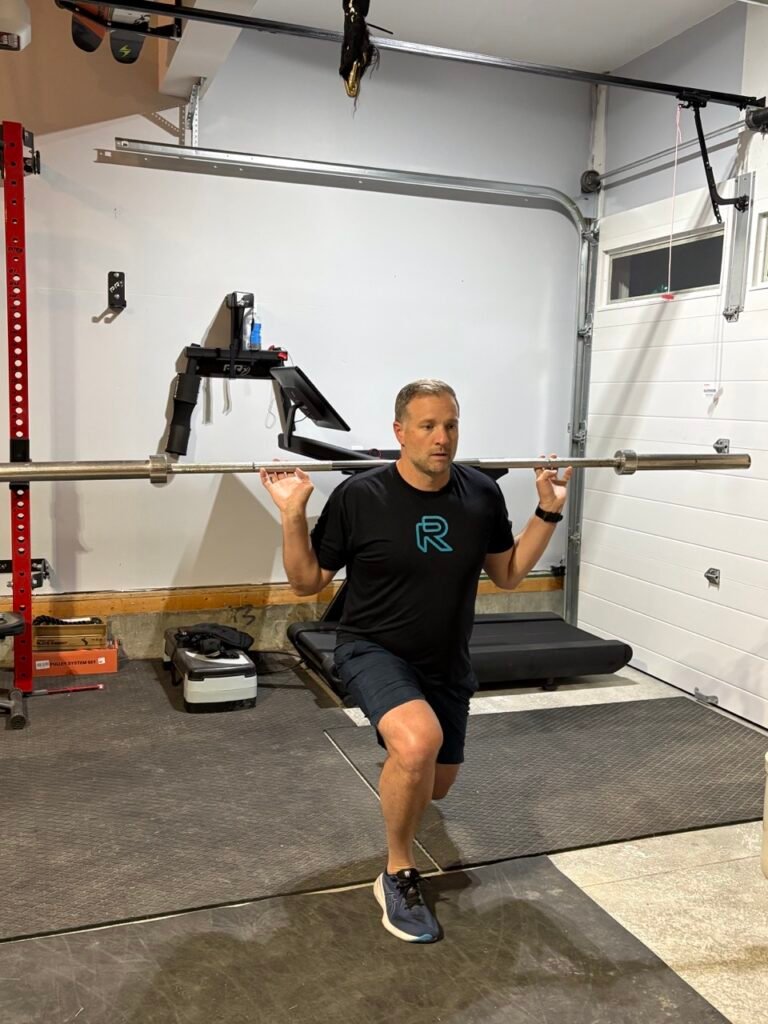
- Your strength and flexibility (musculoskeletal system) – Detecting a loss of balance is only useful if your body can respond. Strong legs, a stable core, and mobile joints are what actually catch you when you start to tip. Weakness here is one of the most common and most fixable causes of poor balance.
- Your brain (central nervous system) – Finally, your brain gathers signals from all four systems, sorts through them in a fraction of a second, and tells your muscles how to react. Balance training is really about sharpening that whole conversation.
How to Improve Balance at Home
You don’t need special equipment to make real progress. A few minutes a day is enough to start:
- Single-leg stance – Stand on one foot for 30 seconds, then switch. To progress, close your eyes or stand on a pillow – both remove input and force other systems to work harder.
- Heel-to-toe walk. Walk a straight line, placing the heel of one foot directly in front of the toes of the other, eyes forward. It’s a simple way to challenge coordination and control.
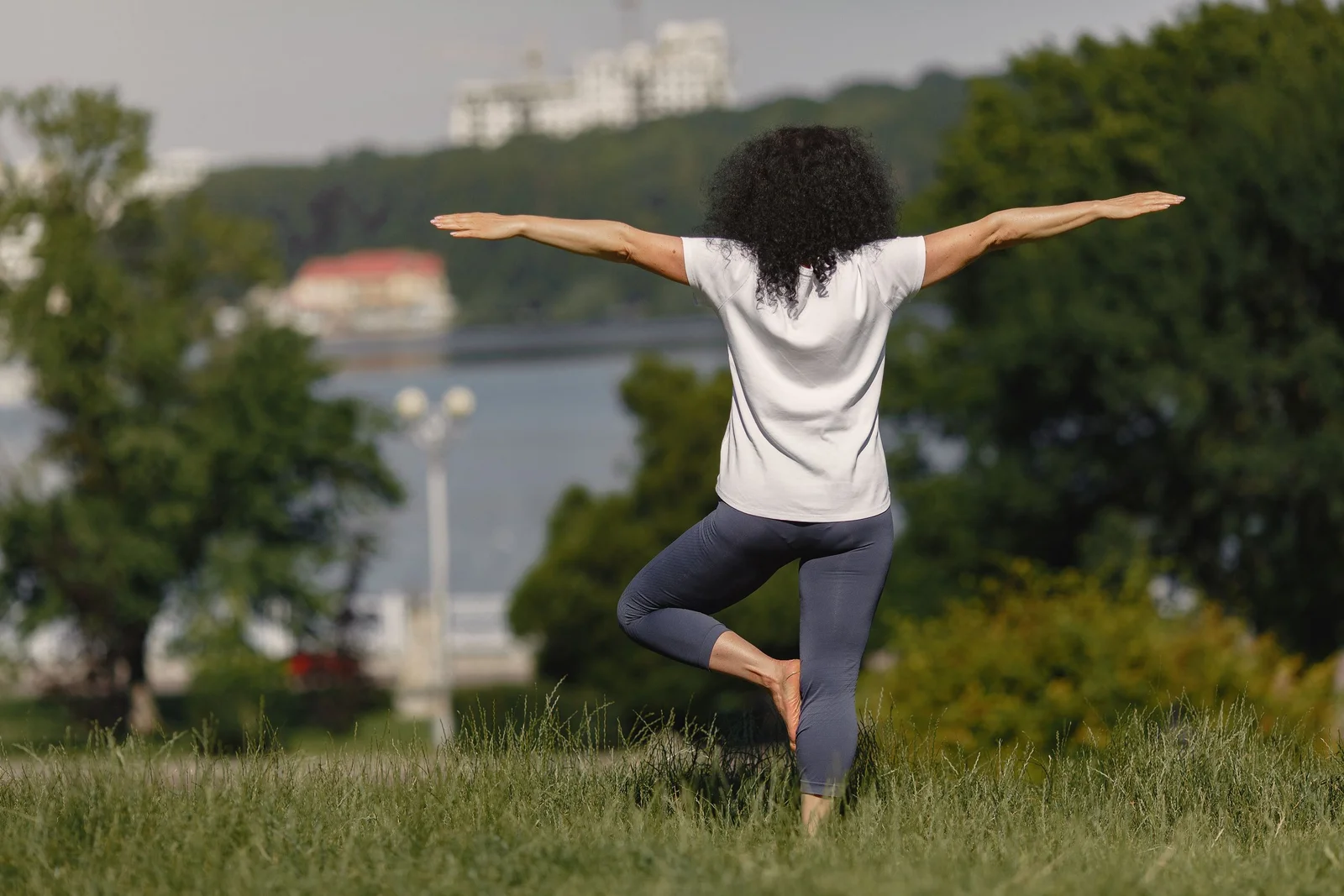
- Tai chi or yoga. Slow, controlled movement trains strength, flexibility, body awareness, and coordination all at once, which makes these excellent whole-body options.
A Note on How to Improve Balance Safely
Balance training is only helpful if it’s safe for you. Always work near a sturdy surface like a countertop, and stop immediately if you feel dizzy or unsteady. If you’ve had falls, an injury, or any dizziness, check in with a physiotherapist before you begin. They can identify which of the five systems needs attention and build a plan that progresses at the right pace – often the fastest and safest route to steadier movement.
Move With Confidence
Whether you’re recovering from an injury, staying sharp for sport, or simply want to feel secure on your feet as you age, learning how to improve balance is one of the most worthwhile things you can do for your body.
Our team at Riverside Sports Therapy can assess where your balance stands today and design a program to build it. Book an assessment and start moving with more confidence.